
Family Archetypes: The Role You Never Auditioned For
Updated: Mar 25
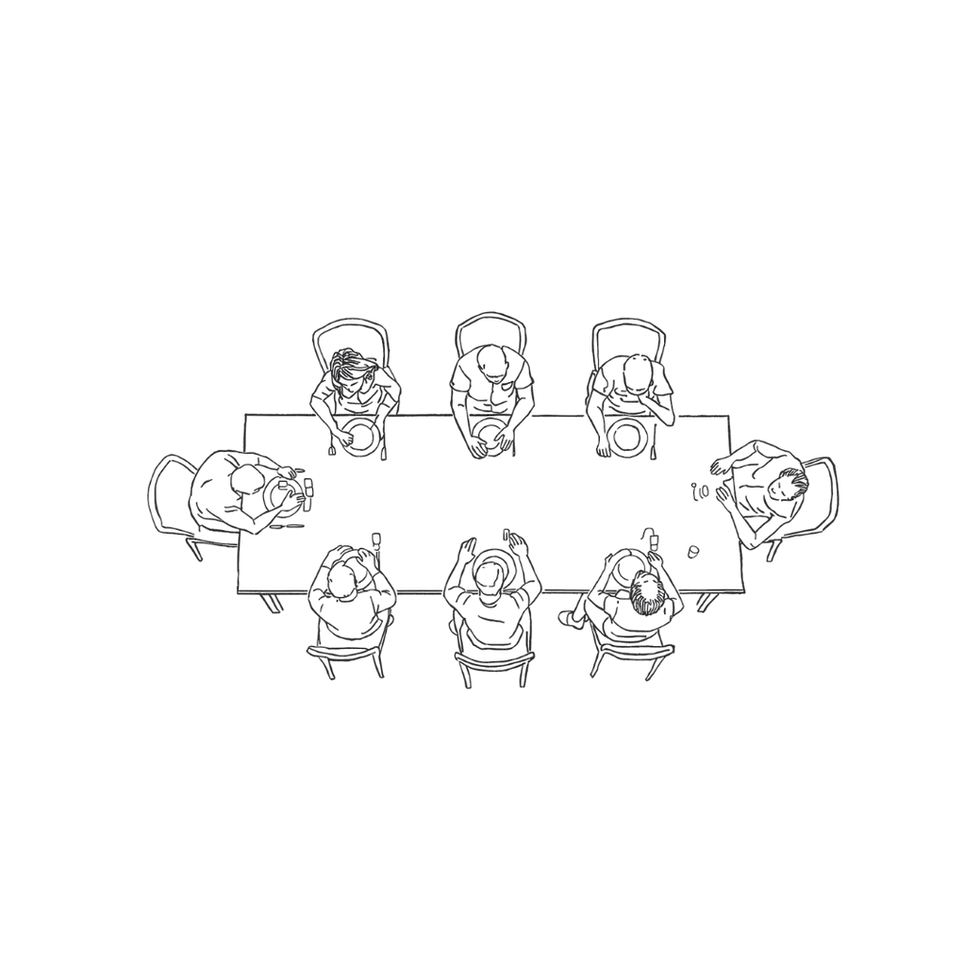
Nobody sat you down as a child and handed you a script. Nobody said, "Here is your role, here is your line, here is how this family needs you to function." It happened the way most defining things happen in childhood... gradually, invisibly, and completely.
You just became the person the system needed you to be.
Family systems, especially dysfunctional ones, operate like any other system. They need certain functions performed to stay in balance. Somebody has to carry the blame when things go wrong. Somebody has to keep everyone laughing so nobody has to feel it. Somebody has to achieve so the family has proof that everything is fine. Somebody has to disappear so the system has one less problem to manage.
These aren't character traits. They're job assignments. And they get handed out before you have language to question them, before you know there's a system at all, before you have any say in the matter.
That's what a family archetype is. Not a personality type. Not a diagnosis. A survival adaptation to a system that needed you to function a certain way.
The Compass Problem
Here's what makes this complicated. When you grow up inside a role, your internal compass gets calibrated to it. The way you read yourself, the way you assess your own worth, the way you decide what's safe and what isn't, all of it gets set inside that original system.
A compass that needs recalibration doesn't stop working. That's the part nobody tells you. It keeps pointing. Confidently. In the wrong direction. And if you've never had a true north to compare it to, you have no way of knowing the reading is off. You just keep following it and wondering why you end up in the same place.
It's like looking through a lens that's been cracked since childhood. You're seeing through it every day. Every relationship, every room you walk into, every judgment you make about yourself. And you don't know the image is distorted because you've never seen it any other way.
This is why smart, self-aware, deeply perceptive people keep ending up in the same dynamics. It's not a lack of intelligence. It's a calibration problem.
The Roles
Every dysfunctional family system produces recognizable archetypes. They exist in relationship to each other; you can't have a scapegoat without a golden child, you can't have a clown without unbearable tension that needs diffusing. The roles are interdependent because the system needs all of them functioning simultaneously to maintain its particular kind of balance.
The Scapegoat carries the blame. The one who was always the problem, always getting caught, always somehow at fault even when they weren't. They didn't earn that role. The system needed somewhere to put what it couldn't look at directly.
The Golden Child carries the proof. The achiever, the favorite, the one who made the family look fine. Loved for their performance, not their personhood. Following a compass that was always someone else's.
The Black Sheep carries the truth. The one who couldn't pretend, couldn't smooth it over, couldn't perform the version of the family the system needed. Made into the problem because they saw the problem clearly.
The Clown carries the tension. The one who learned that making people laugh was the fastest way to make things safe. Beloved by everyone. Known by almost no one.
The Caretaker carries everyone else. The one who learned that being needed is the closest available substitute for being loved. Still rebuilding their life around other people's emergencies, still waiting for permission to have needs of their own.
The Lost Child carries the silence. The one who disappeared because disappearing was the safest option. Self-sufficient not by choice but by necessity. Still taking up less space than they're entitled to.
The Canary in the Coal Mine carries the symptoms. The sensitive one, the sick one, the difficult one. Whose body kept an accurate record of everything the family refused to name. Whose compass was actually the most accurate of all — and the most ignored.
The Parentified Child carries the adults. The one who became a peer, a confidant, an emotional support system before they were old enough to need one themselves. Still running on hypercompetence. Still waiting for someone else to be in charge for once.
Why it Follows You
The role doesn't stay in the family. That's the part that surprises people.
You leave the house. You build a life. And then you notice it, the same dynamic at work, the same position in your friend group, the same exhaustion in your relationships. The same feeling of being the one who carries something nobody else will claim.
That's not a coincidence. That's a nervous system doing what it was trained to do, in rooms that have nothing to do with where the training happened.
The workplace becomes the family system. The church community becomes the family system. The friend group, the relationship, the team, or any system that forms will activate the original role if the compass hasn't been recalibrated. Not because you're broken. Because the nervous system is doing exactly what it learned to do to survive.
Seeing the role clearly doesn't undo it overnight. But it does something that nothing else can do: it gives you the distance to ask whether the role still fits. Whether the job you were assigned is one you'd actually choose. Whether the compass you've been following belongs to you or to the system that handed it to you.
That question is where everything starts to shift.
The Family Archetypes Series is coming. Eight archetypes, eight survival adaptations, and the adult life each one builds in the dark. If you recognized yourself somewhere in this post, stay close. Your episode is on its way.
Thank you for reading. If this piece resonated with you and you’d like support in untangling these patterns in your own life, I offer a free 30-minute consultation. It’s a gentle space to talk, reflect, and see whether working together feels like a good fit. You can book a time through my website whenever you’re ready.


Comments